As we move into 2026, many of the best home mining machines from 2025 remain highly competitive. Several low-power ASIC miners released last year continue to deliver strong efficiency and stable performance for residential setups.
While large-scale Bitcoin mining operations dominate the industry, high equipment costs and infrastructure requirements can create barriers for individual miners. As a result, compact and energy-efficient ASIC miners have become increasingly popular among home users seeking manageable entry costs and flexible deployment.
In addition to Bitcoin, alternative cryptocurrencies with lower power requirements are also attracting attention from small-scale miners. These models offer quieter operation, lower electricity consumption, and easier installation in home environments.
If you are exploring home crypto mining options in 2026, the following are five of the most suitable low-power ASIC miners to consider.
How to Choose the Right Home Crypto Miner
Before selecting a mining machine, it is important to evaluate several key factors beyond just hashrate.
Initial Investment and ROI
The upfront price of a miner is only part of the total cost. Electricity expenses, maintenance, and potential downtime should also be considered.
For example, a $2,000 miner generating $10 per day in cryptocurrency (after electricity costs) would require approximately 200 days to reach ROI, assuming stable mining difficulty and cryptocurrency prices. In practice, difficulty adjustments and market volatility can significantly affect returns.
Many experienced miners calculate ROI under both optimistic and conservative scenarios to better manage expectations and reduce financial risk.
Mining Performance and Efficiency
Hashrate determines how much computational power a miner contributes to a network, while energy efficiency (J/TH or similar metrics) reflects how much electricity is required to generate that power.
For home environments, efficiency is often more important than maximum hashrate. A slightly lower hashrate with better efficiency can reduce long-term electricity costs and improve overall stability.
Power Consumption and Home Electrical Limits
Residential electrical systems have limitations. Machines under 500W are generally easier to deploy without upgrading circuits. Always check:
Rated voltage
Total wattage
Circuit load capacity
For higher-power units, proper ventilation and electrical planning are essential.
Noise and Heat Management
Even compact ASIC miners generate heat and noise. Low-power models are typically quieter and better suited for bedrooms, home offices, or small dedicated spaces.
Best Low-Power ASIC Miners for Home Mining in 2025
1. Canaan Avalon Nano 3S
Canaan Avalon Nano 3S is an ASIC miner designed for the SHA-256 algorithm, specifically targeting BTC (Bitcoin) . It delivers a maximum hashrate of 6Th/s while consuming 140W of power, resulting in an energy efficiency of 0.023j/Gh.
The latest generation of BTC lottery machines.
In the case of Solomining, users have the opportunity to monopolize the rewards of blocks. If high-computing BTC machines are too expensive and make a lot of noise, home BTC mining machines can be used as multi-functional ornaments. Their cool appearance and micro-heater function allow users to stay in their bedrooms.
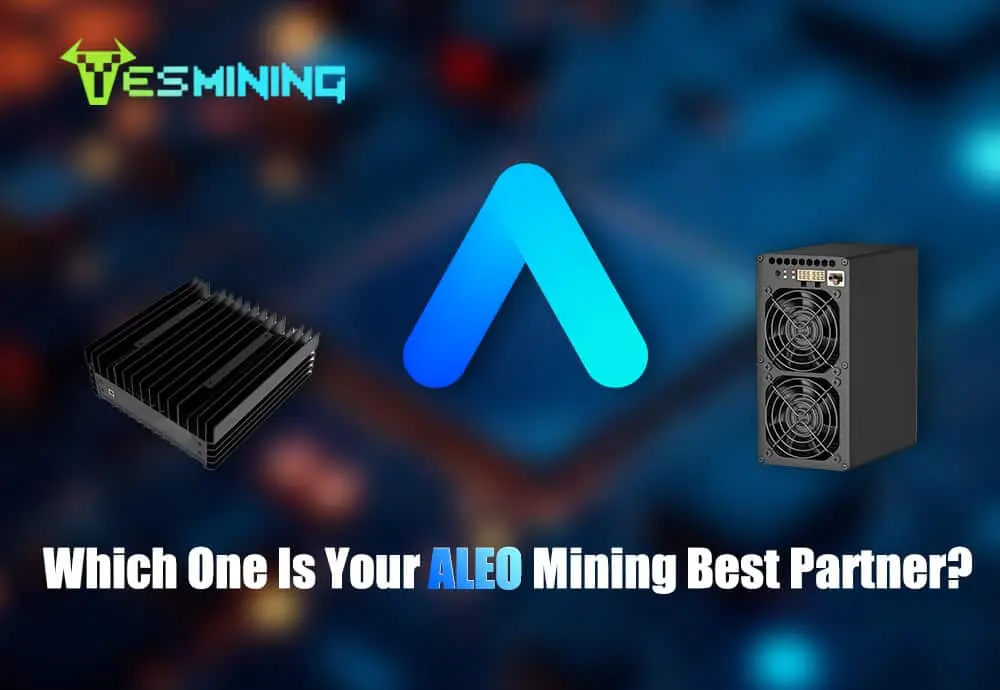
2. IceRiver Aleo AE0 50Mh
IceRiver ALEO AE0 is an ASIC miner designed for the zkSNARK algorithm, specifically targeting ALEO (Aleo). It delivers a maximum hashrate of 50Mh/s while consuming 100W of power, resulting in an energy efficiency of 0.002j/kh.
With only 100Watts of power consumption and up to 50Mh of computing power, it is the most powerful Aleo machine in March 2025.
Under the efficient calculation of the dedicated Asic miner, the total computing power of the Aleo network is declining (graphics card GPUs are gradually being eliminated from the POW track).
Compared with Goldshell AE-BOX & Goldshell AE-BOX Pro has lower power consumption and higher computing power.
3. IceRiver Kas KS7 Lite
IceRiver KAS KS7 Lite is an ASIC miner designed for the KHeavyHash algorithm, specifically targeting KAS (Kaspa). It delivers a maximum hashrate of 4.2Th/s while consuming 500W of power, resulting in an energy efficiency of 0.119j/Gh.
In the past two years, Kaspa has been a popular currency among many investors. While maintaining quiet and efficient computing, it also has a computing power of 4.2T.
Although Kaspa’s performance lags behind other coins in 2025, we can still expect it to have a surprising performance in the 2025 bull market.
4. Volcminer D1 Mini Pre
VolcMiner D1 Mini Pre is an ASIC miner designed for Scrypt algorithm, specifically targeting DOGE (Dogecoin) and LTC (Litecoin). It delivers a maximum hashrate of 2.2Gh/s while consuming 500W of power, resulting in an energy efficiency of 0.227j/Mh.
Compared to Elphapex DG home1 2G 620W, DG mini pre 2.2G 500W has higher computing power and lower power consumption.
So, it has a place in the Yesmining recommendation list.
With Doge coins and Lite coins performing well at the end of 2024, you will not miss the bull market 2025 with such a quiet and efficient machine that can continuously and quietly mine Doge coins for you at home.
5. Canaan Avalon Q
Canaan Avalon Q is an ASIC miner designed for SHA-256 algorithm, specifically targeting BTC (Bitcoin) . It delivers a maximum hashrate of 90Th/s while consuming 1674W of power, resulting in an energy efficiency of 0.019j/Gh.
Avalon Q has a very good energy efficiency ratio of 0.019j/Gh. (While S19Jpro 90T 0.036j/Gh)
This means that it can not only perform Solo mining, but also operate under normal mining pool connection when BTC price is high, and when the coin price is lower, it will become a lottery machine with a higher winning rate.
Two different types of options make it suitable for different customer groups. If you are very interested in BTC, then don’t miss it.
Final Thoughts
Home crypto mining in 2026 continues to focus on efficiency, manageable power consumption, and practical deployment. For most residential users, low-power ASIC miners offer a balanced approach—reducing electricity costs, minimizing noise, and simplifying setup requirements.
Whether you are exploring small-scale Bitcoin participation or alternative cryptocurrencies with lower energy demands, selecting the right machine depends on your budget, electrical capacity, and long-term expectations. Careful evaluation of ROI scenarios, efficiency metrics, and home infrastructure will help ensure a more stable and sustainable mining experience.
If you would like to explore more models designed specifically for residential use, you can browse the curated selection of home mining machines available at Yesmining. The collection includes compact, energy-efficient ASIC miners suitable for beginners and experienced home miners alike, and will continue to be updated as new hardware becomes available.
FAQs
1. What is the best home Dogecoin ASIC miner?
For home Dogecoin mining, the VolcMiner D1 Mini Pre is a strong option. Its key advantage is merged mining, allowing users to mine Litecoin and Dogecoin simultaneously without additional power consumption. According to LitecoinPool data, merged mining can increase profitability by approximately 15–30% compared to mining a single coin alone, while keeping electricity usage unchanged.
2. Are low power crypto miners under 500W still profitable?
Low power miners under 500W can still be profitable, especially in regions with competitive electricity rates. Lower energy consumption reduces operational risk, but actual profitability depends on market prices, mining difficulty, and pool fees. Always calculate ROI under conservative assumptions.
3. Is home Bitcoin mining still worth it in 2026?
Home Bitcoin mining in 2026 can still be worthwhile for users with efficient hardware and stable electricity costs. While large-scale farms dominate the network, compact and energy-efficient ASIC miners allow individuals to participate on a smaller, more manageable scale.









.webp)














 Bitmain
 Iceriver
 Bitdeer
 BOMBAX
 DragonBall
 Elphapex
 Fluminer
 Goldshell
 iBelink
 Ipollo
 Jasminer
 Volcminer
 Bitcoin(BTC) Miner
 Aleo Miner
 CKB Miner
 ETC Miner

 Kaspa(KAS) Miner


 Siacoin(SC) Miner