Bitcoin mining has evolved dramatically over the years. What once could be done with a personal computer is now a highly competitive, industrial-scale business. One of the most common questions new and experienced miners ask is:
How long does it really take to mine 1 Bitcoin?
The short answer: it depends. The long answer involves hash rate, mining difficulty, hardware efficiency, electricity cost, and strategy. In this guide, we’ll break down the reality behind Bitcoin mining timelines, use modern ASIC miners like the Antminer S21 Pro (234 TH/s) and S23 (318 TH/s) as examples, and share practical tips to mine Bitcoin faster and smarter.
Table of Contents
1. How Bitcoin Mining Works (Quick Refresher)
2. So, How Long Does It Take to Mine 1 Bitcoin?
3. Hash Rate: The Most Important Factor in Bitcoin Mining Speed
– Antminer S21 Pro – 234 TH/s
– Antminer S23 – 318 TH/s
– Hash Rate Comparison
4. Network Difficulty and Global Competition
5. Solo Mining vs Pool Mining
6. Electricity Cost: The Silent Profit Killer
7. Real-World Example: How Long with Modern Hardware?
8. Tips to Mine Bitcoin Faster and Smarter
9. Is Mining 1 Bitcoin Still Worth It?
10. Final Thoughts
How Bitcoin Mining Works (Quick Refresher)
Bitcoin mining is the process of validating transactions and securing the Bitcoin network. Miners compete to solve cryptographic puzzles, and the first to succeed earns the block reward.
Key facts:
– Average block time: 10 minutes
– Blocks per day: ~144
– Current block reward: 3.125 BTC
– New BTC mined per day: ~450 BTC
All miners worldwide share these rewards based on their contribution to the network hash rate.
So, How Long Does It Take to Mine 1 Bitcoin?
There is no fixed timeline. Mining 1 BTC could take:
– Years for a single machine
– Months for a mid-size mining operation
– Weeks for a large industrial farm
The reason is simple: Bitcoin mining is a probability game, not a linear process.
Hash Rate: The Most Important Factor in Bitcoin Mining Speed
Hash rate measures how many cryptographic calculations a miner can perform per second. A higher hash rate means a larger share of the Bitcoin network and higher expected rewards.
Antminer S21 Pro – 234 TH/s
The Antminer S21 Pro delivers approximately 234 terahashes per second (TH/s), making it a powerful upgrade from older S19-series machines.
With 234 TH/s:
– The miner contributes 234 trillion hashes per second
– In pool mining, rewards are distributed proportionally based on this hash rate
– Earnings are stable and predictable, rather than relying on luck
Despite its strong performance, 234 TH/s still represents only a tiny fraction of the global Bitcoin network. As a result, solo mining remains unrealistic, but pool mining becomes efficient and consistent.
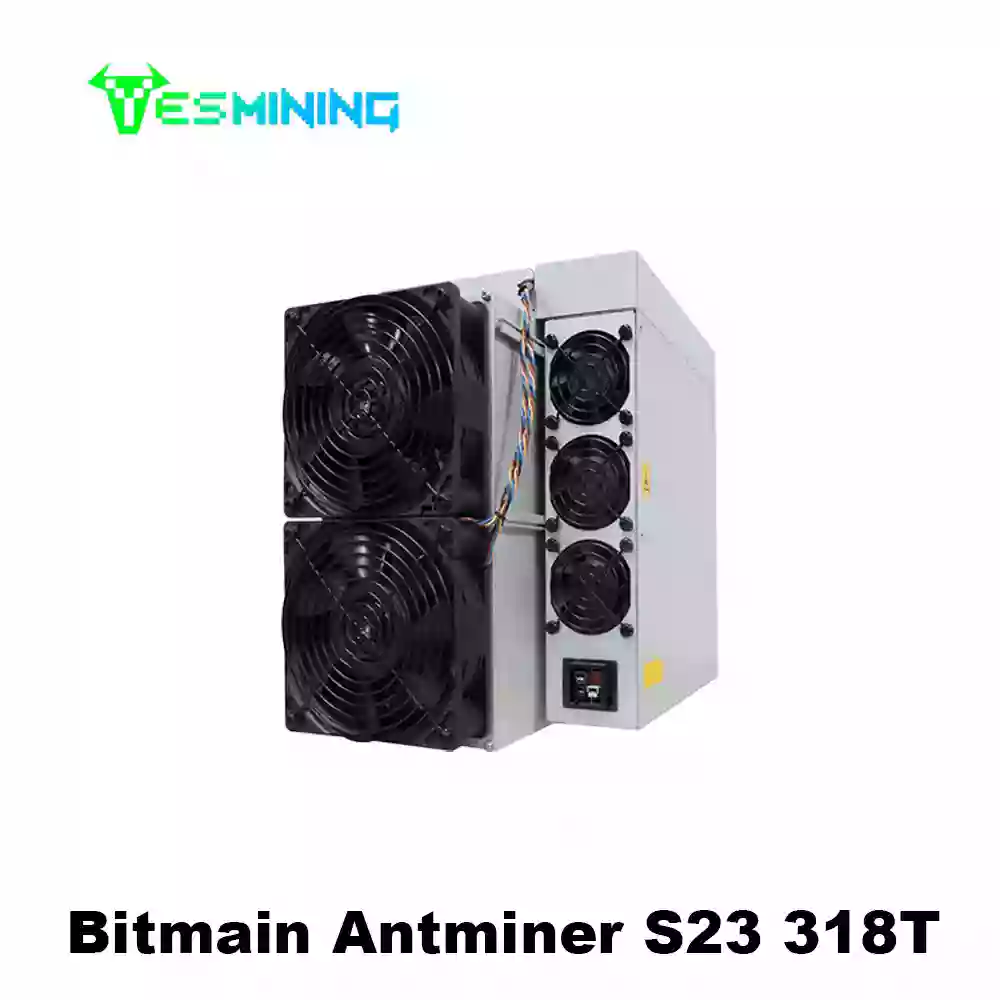
Antminer S23 – 318 TH/s
The Antminer S23 takes mining performance even further, offering around 318 TH/s. Compared to the S21 Pro:
– 36% higher hash rate
– Larger share of mining pool rewards
– Faster BTC accumulation per machine over time
For professional mining farms, higher hash rate density means fewer machines are needed, reducing infrastructure and maintenance complexity. The S23 is particularly attractive for large-scale and long-term mining operations.
Hash Rate Comparison
| Model | Hash Rate | Relative Power | Best Use Case |
|---|
| Antminer S21 Pro | 234 TH/s | Baseline | Balanced efficiency and performance |
| Antminer S23 | 318 TH/s | +36% | High-density farms, long-term mining |
For a detailed comparison between the S21 and S23 series, see our dedicated guide: Antminer S21+ vs S23 — Which BTC Miner Fits Your Needs in 2026.
Network Difficulty and Global Competition
Bitcoin automatically adjusts mining difficulty approximately every two weeks. As more miners join the network, difficulty increases, making it harder to earn the same amount of BTC.
Key implications:
– Your machine does not get slower, but your share of rewards decreases
– New hardware helps offset difficulty growth
– Long-term miners must continuously optimize efficiency
Solo Mining vs Pool Mining
Solo Mining:
– Mine alone
– Keep 100% of the block reward
– Probability of success is extremely low
Pool Mining:
– Combine hash rate with other miners
– Rewards shared based on contribution
– Small but consistent BTC payouts
Electricity Cost: The Silent Profit Killer
Mining speed alone does not equal profitability. Key factors include cost per kWh, power consumption, and cooling.
YesMining offers energy-efficient miners to optimize long-term profitability. Explore energy-efficient mining machines.
Real-World Example: How Long with Modern Hardware?
Assumptions (illustrative):
– Network hash rate: 600 EH/s
– Pool mining
– Stable difficulty
S21 Pro (234 TH/s): ~0.00017 BTC/day → ~16–18 years to mine 1 BTC
S23 (318 TH/s): ~0.00023 BTC/day → ~11–12 years to mine 1 BTC
For full real-world operational analysis, see Antminer S21 vs S23 Comparison.
Tips to Mine Bitcoin Faster and Smarter
- Choose efficient, next-generation hardware
- Optimize power and cooling
- Join a reliable mining pool
- Think long-term, not short-term
- Scale strategically
Is Mining 1 Bitcoin Still Worth It?
Mining is no longer a shortcut to quick profits, but it can be worthwhile with low-cost electricity, efficient hardware, and a long-term strategy. Many miners combine BTC purchases with mining.
Final Thoughts
Modern miners like the S21 Pro and S23 improve efficiency, but success still depends on smart planning, cost control, and patience. Mining today is not about luck — it’s about strategy, efficiency, and long-term vision.
FAQ
1, Is it realistic to mine 1 Bitcoin with a single machine?
No, most miners accumulate BTC gradually through pool mining over years.
2, Does a higher hash rate always mean higher profit?
Not necessarily; electricity cost, efficiency, and uptime are critical.
3, Is it better to mine or buy Bitcoin directly?
Mining is for long-term accumulation; many miners combine mining and purchases.
4, Why do professional miners keep upgrading hardware?
To stay competitive as network difficulty increases, maintain BTC production, and survive market downturns.
Explore Bitcoin Miners at YesMining.io





















 Bitmain
 Iceriver
 Bitdeer
 BOMBAX
 DragonBall
 Elphapex
 Fluminer
 Goldshell
 iBelink
 Ipollo
 Jasminer
 Volcminer
 Bitcoin(BTC) Miner
 Aleo Miner
 CKB Miner
 ETC Miner

 Kaspa(KAS) Miner


 Siacoin(SC) Miner