Bitcoin mining remains one of the most exciting entry points into the crypto industry. While the market has matured significantly, many new miners in 2025 are still asking the same questions:
What hardware should I start with?
What legal issues should I be aware of?
And what strategies can minimize my risks while maximizing rewards?
In 2025, Bitcoin mining profitability depends on three core factors: hashrate efficiency (your miner’s TH/s per watt), electricity costs (target <$0.08/kWh for positive ROI), and network difficulty (which adjusts every 2 weeks). The “strategies” section of this guide will directly address these variables to boost your bottom line.
This guide breaks down these three pillars of hardware, legal considerations, and strategies to help beginners enter Bitcoin mining with clarity and confidence.
Hardware: Choosing the Right Mining Equipment
The choice of mining hardware determines your efficiency, profitability, and long-term sustainability. As of 2025, here are three categories of hardware that cater to different needs and budgets:
Home-Friendly Miners
For individuals who want to test the waters without committing to industrial-scale mining, compact home miners are a great entry point, and choosing the right one is your first profitable strategy:
Canaan Avalon Q 90T (90 TH/s, 1674 W) –A beginner-friendly pick. At $0.10/kWh, it has ~$4.02 daily electricity costs and earns ~$4.47 daily, giving $0.46 daily profit.
Fluminer T3 (115 TH/s, 1700 W) – Known for its silent operation, making it perfect for home environments. Available as both spot and pre-order.
These models reduce entry risks for new miners and offer stable returns. This dual benefit is a key goal of profitable mining strategies in 2025.
Professional-Grade Miners: The Antminer S21 Series
For those planning to scale beyond home setups, the Bitmain Antminer S21 Series stands out in 2025 as one of the most competitive solutions.
Antminer S21+ 216 –225–235 TH/s at 3564 W, a strong balance between efficiency and affordability.
Antminer S21 PRO 234–245 TH/s at 3510 W, offering higher hashrate with excellent energy efficiency.
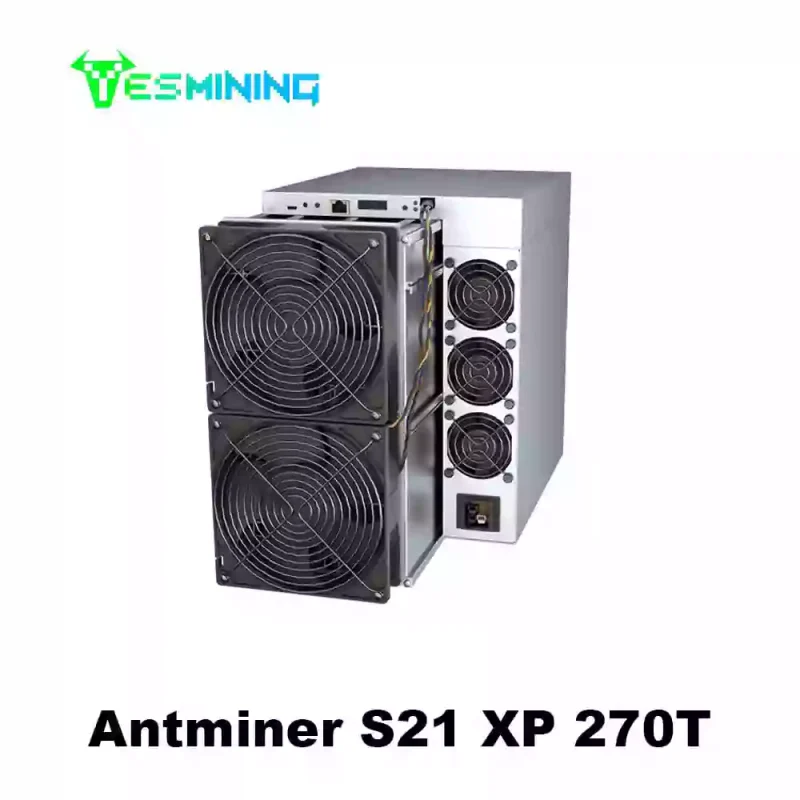
Antminer S21 XP 270 TH/s at 3645 W, the most powerful option in the lineup, is built for miners seeking maximum performance.
The S21 family provides flexibility for miners at different scales—whether you’re upgrading from home mining or aiming for industrial operations.
*Hardware Consideration: Don’t Forget the Supporting Cast
Your ASIC doesn’t run in a vacuum. You’ll also need:
A Stable Internet Connection: Downtime is lost profit.
A High-Power Electrical Setup: 220V outlets are standard for these power-hungry machines.
Ventilation & Cooling: ASICs generate a tremendous amount of heat and noise. A proper air cooling kit (fans, exhaust systems) is non-negotiable to prevent damage and maintain efficiency.
Legal Considerations in 2025
Before jumping in, new miners must understand the regulatory landscape. Bitcoin mining laws differ by country, and even by region.
United States & Europe – Mining is generally legal but subject to electricity tariffs and sometimes environmental regulations. Some states or countries may also offer incentives for using renewable energy.
Asia – Policies vary widely; while some regions encourage mining, others impose restrictions due to power consumption concerns.
Emerging Markets – Countries with low-cost electricity (such as parts of Africa and South America) are becoming attractive spots for new mining hubs.
Always check your local compliance rules before purchasing hardware or setting up operations. Running an unlicensed or non-compliant mining operation could lead to penalties.
Strategies for New Miners
Even with the right hardware and compliance, profitability depends on smart strategy. Here are three practical approaches for beginners:
Start Small, Scale Gradually – Begin with one or two machines to learn the basics, then expand as you gain confidence.
Diversify Your Investment – Instead of putting all your funds into hardware, consider a mixed approach: part in machines, part in holding Bitcoin. This helps balance immediate mining rewards with potential long-term gains.
Focus on Efficiency – Electricity is the largest ongoing cost. Look into low-cost or renewable energy options to improve ROI.
Strategies for Success – Beyond Plugging In
With the right hardware and legal foundation, your strategy will determine your profitability.
Solo Mining vs. Pool Mining:
Solo Mining: You mine alone. If you find a block, you get the entire ~3.125 BTC reward (plus fees). This is akin to winning the lottery and is only feasible for those with massive mining farms.
Pool Mining (Recommended for 95% of Miners): You combine your hashing power with thousands of other miners. When the pool finds a block, the reward is distributed based on the amount of “shares” you contributed. This provides a steady, predictable stream of income. Research pools like Foundry USA, Antpool, F2Pool, and ViaBTC for their fee structures and payout schemes.
Managing Overhead: The Silent Profit Killer:
Electricity Cost: This is your largest ongoing expense. Securing a rate below $0.08/kWh is crucial for profitability with current-gen hardware.
Hosting Solutions: Don’t have a cheap power source or a place to put a loud, hot machine? Host your miner in their professional data center for a monthly fee. This simplifies everything but cuts into your margins.
Network Difficulty: This is a measure of how hard it is to find a new block. It adjusts approximately every two weeks. As more miners join the network, the difficulty increases, reducing your share of the rewards. Your strategy must account for a constantly rising difficulty.
The Long-Game Mindset: Hodling
Many miners adopt a “hodl” strategy. Instead of immediately selling mined bitcoin to cover fiat costs, they hold it, betting that the long-term appreciation of Bitcoin will far outweigh the short-term operational costs. This turns mining into a powerful, automated dollar-cost averaging (DCA) mechanism.
Final Thoughts
Bitcoin mining in 2025 remains an accessible yet competitive field. By choosing the right hardware, understanding the legal landscape, and adopting smart strategies, new miners can enter the industry with reduced risks and greater confidence.
Mining isn’t just about chasing quick profits—it’s about building a long-term position in the Bitcoin ecosystem. For newcomers, the key is to start small, stay informed, and grow sustainably.
*Disclaimer: This article is for informational purposes only and does not constitute financial, legal, or investment advice.
Is Bitcoin mining profitable in 2025?
Depends on hardware efficiency, electricity cost, and network difficulty.
What’s the best Bitcoin mining hardware for beginners 2025?
Home-friendly options like Canaan Avalon Q 90T, Fluminer T3 (home-friendly) and Antminer S21 Series for professional miners.
Solo mining vs pool mining for profit?
Pool mining (e.g., Foundry USA, Antpool) is better for steady income.
How to reduce Bitcoin mining electricity costs?
Use low-cost/renewable energy, efficient ASIC miners.
ROI for Bitcoin mining hardware 2025?
Varies by model: Canaan Avalon Q 90T ~58 months (at $0.10/kWh); Antminer S21 Series ~6 – 7 months (industrial setups).
Hosting vs home Bitcoin mining – which is cheaper?
Hosting simplifies but cuts margins; home is better with cheap power and space.





















 Bitmain
 Iceriver
 Bitdeer
 BOMBAX
 DragonBall
 Elphapex
 Fluminer
 Goldshell
 iBelink
 Ipollo
 Jasminer
 Volcminer
 Bitcoin(BTC) Miner
 Aleo Miner
 CKB Miner
 ETC Miner

 Kaspa(KAS) Miner


 Siacoin(SC) Miner