Want to get into Dogecoin mining in 2025 but worried about “losing money on electricity due to wrong hardware choices,” “noise disturbing your home life,” or “not knowing how to control costs for industrial setups”? This guide combines the latest network hashrate, equipment efficiency data, and scenario-specific recommendations (home/industrial) to help you avoid risks, choose the right rigs, and calculate your return on investment (ROI)—so you can mine efficiently and profitably.
Dogecoin mining in 2025 is seeing rapid growth, with network hashrate and mining difficulty on the rise—driven by the entry of large mining pools and major companies into the space. For better results and higher earnings, many miners are turning to top-tier Dogecoin machines like the Antminer L11 Hyd 6U and VolcMiner D1 Hydro, which work effectively for both home setups and large-scale business operations. What’s more, 2025’s projected network hashrate has jumped from 2023’s moderate levels and 2024’s high figures to a “very high” range dominated by industrial players, while mining difficulty is also set to increase compared to previous years.
Key Takeaways
Dogecoin mining will become more challenging in 2025; choosing high-quality ASIC miners is essential to boost earnings—and these rigs also help reduce energy costs.
Cloud mining offers a straightforward entry point for Dogecoin mining: you can rent mining power without investing in expensive hardware.
Home miners should prioritize quiet, energy-efficient machines. This not only cuts down on electricity bills but also supports more sustainable, long-term coin mining.
2025 Dogecoin Mining Trends: What You Need to Know
Network Difficulty & Hashrate: Competition Rises, Thresholds Increase
The core challenge of Dogecoin mining in 2025 lies in the surging network competition. Key data shows:
For individual miners, “low-efficiency hardware (GPU/CPU)” will barely be profitable—high-performance ASICs or cloud mining are the only viable options.
Technology Trends: ASIC Dominance + Cloud Mining Popularity
2025 sees two clear hardware trends:
ASICs as the gold standard: ASICs have an average energy efficiency of 30 J/TH, far outperforming GPUs (150 J/TH) and CPUs (2000 J/TH). Even with cheap electricity ($0.08/kWh), GPUs only break even for hobbyists, while CPUs are completely obsolete.
Cloud mining for beginners: Cloud mining (renting hashing power online) has a daily return rate of over 9% and requires no upfront hardware investment. It’s ideal for users with no space or technical experience.
Scenario Differentiation: Home vs. Industrial Mining
*Tip: If your home electricity cost exceeds $0.2/kWh, buying Dogecoin directly may be more cost-effective than mining.
Choosing Dogecoin Mining Hardware
Home User Recommendations
Home users want simple mining that does not use much power. They look for machines that fit their money and space. Many pick ASIC miners because they work well and make more money. Some new miners try GPU miners. These can mine other coins but are not as good for Dogecoin. CPU mining is not smart. It uses too much power and does not earn much.
When picking a miner, home users should think about cost, how well it works, and how much money it can make. They also need to check power bills, how long the machine will last, and if prices change a lot. A good home mining setup needs strong hashrate and low power use. Joining a mining pool helps you earn more coins.
Industrial User Recommendations
Industrial miners want machines that run all day and make lots of money. They pick ASIC miners with good cooling. These miners care about power prices and how long machines last. They buy new models to stay ahead. Big mining setups need good planning to keep making money.
Key points for industrial miners:
Pick hardware with strong hashrate and low power use.
Spend money on cooling to keep machines safe.
Watch market trends to know when to upgrade.
Plan for changes in profits as more people mine.
Budget and ROI
Budget is important for every miner. People with less money buy used ASIC miners. These cost less and can pay off faster. Used miners may make back money in 6 to 9 months. New miners cost more but work better and last longer. New ASIC miners can take 12 to 18 months to pay off. Each person must choose if they want fast profit or to mine for a long time.
Used ASIC miners: Cheaper, faster payback, but may not last as long.
New ASIC miners: Cost more, work better, last longer, slower payback.
Always check power prices and how well the machine works before buying.
Thinking ahead helps miners pick the best machine. The dogecoin market changes quickly, so miners should be ready for new trends and changes in profits.
Tips for ROI Optimization
Prioritize electricity cost: A $0.05/kWh difference can reduce ROI by 30% (e.g., from 500 days to 350 days for a new Antminer L9);
Avoid “too-cheap” used miners: If a used machine is 50% cheaper than market price, it may have irreparable damage (e.g., water damage to cooling systems);
Plan for upgrades: New models (e.g., Antminer L11 Hu6) may reduce efficiency of old rigs—factor in a 10-15% efficiency drop for used miners after 1 year.
Best Dogecoin Mining Hardware 2025
Current Hardware for Home Mining
For home users, Dogecoin mining hardware must meet three core needs: low noise (to avoid disturbing daily life), compact size (to fit limited space), and efficient power use (to control electricity costs). Most home miners don’t need complex cooling systems—air-cooled ASICs are the most practical choice. Below are 3 tried-and-tested models, with key details to help you decide:
Model | Hashrate | Power Consumption | Noise Level | Key Advantages | Ideal Home Scenario | Reference Price (2025 Q1) | Daily Net Profit (Est.*) |
|---|
Bitmain Antminer L9 | 17 GH/s | 3360W | 75 dB (similar to a household fan) | High hashrate for its class; compact size (400×195×290mm) | Garages, storage rooms, or balconies (away from living areas) | $5,600 | ~$10.4 |
ElphaPex DG1+ | 14.4 GH/s (14400 Mh/s) | 3950W | 75 dB (10% quieter than peers) | Budget-friendly; modular design (easy to move) | Small apartments, spare bedrooms | $4300 | ~$6.4 |
VolcMiner D1 Lite | 14 GH/s | 4000±5%W | 50 dB | Overheat protection; compatible with 220V residential circuits | Home offices, mid-size living spaces | $5,550 | ~$5.4 |
Among these models, the Bitmain Antminer L9 is the most popular for serious home miners—it balances hashrate and cost, with a noise level that won’t disturb living areas. The ElphaPex DG1+ is ideal for beginners, as its lower upfront cost reduces risk. The VolcMiner D1 Lite is best for users with mid-size spaces, thanks to its safety features (e.g., overheat protection) that prevent circuit issues.
Current Hardware for Industrial Mining
Industrial miners prioritize three key factors: high hashrate (to compete for block rewards), liquid cooling (for 24/7 stable operation), and low unit energy consumption (to control electricity costs). Below are 3 mainstream models designed for large-scale farms:
| Model | Hashrate | Power Consumption | Cooling Method | Efficiency (J/GH) | Daily Net Profit (Est.*) | Key Advantage for Industry |
|---|
| Bitmain Antminer L11 Hydro 6U | 33 GH/s | 5676 W | Hydro Cooling | 0.21 J/MH | ~$27.29 | Low failure rate (≤1%/year); easy to stack in server racks |
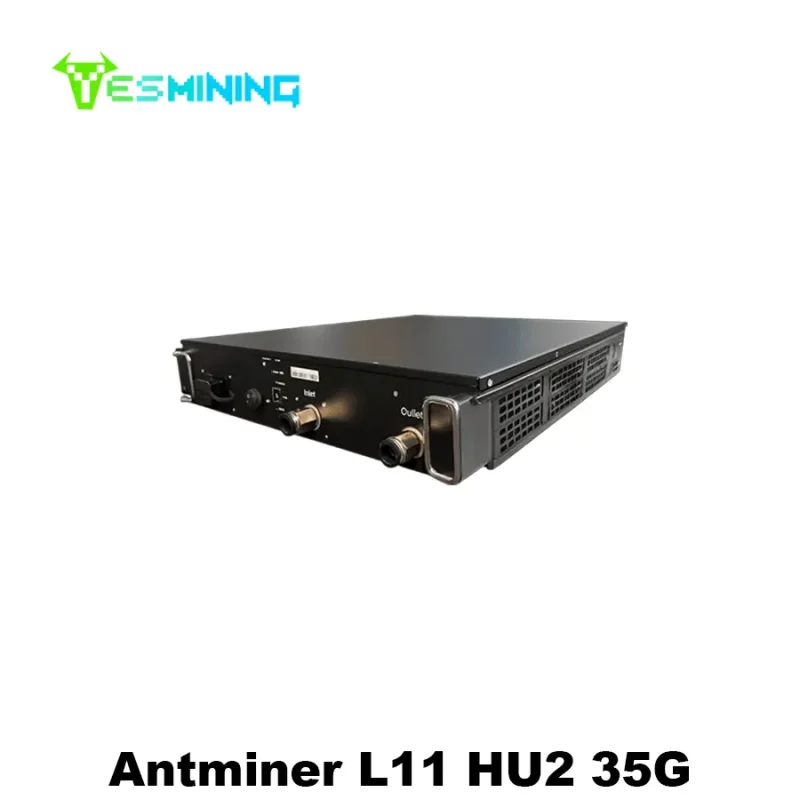
| Bitmain Antminer L11 Hydro 2U | 35 GH/s | 5775 W | Hydro Cooling | 0.165 J/MH | ~$29.65 | The Latest-Gen Miner. Low failure rate (≤1%/year); easy to stack in server racks |
| VolcMiner D1 Hydro | 30.4 GH/s | 7600W | Hydro Cooling | 0.253 J/MH | ~$16.1 | High energy efficiency; reduces long-term electricity costs |
| Elphapex DG2 | 18 GH/s | 3960W | Air Cooling | 0.22 J/MH | ~$8.4 | Balanced cost-performance; suitable for medium-scale farms (50-200 rigs) |
Dogecoin Mining Accessories
While new Dogecoin mining machines stay in focus, 2025 users are fixated on cooling accessories that boost rig efficiency—here are key upgrades, especially for home and small-scale miners:
Miners now have more tailored options like the Cooling Kit CM01 (for Antminer models): a plug-and-play set with a precision-molded directional shroud (stops heat recirculation, lowers core temps by 5–8°C) and low-noise fans (20–30% quieter than stock), plus easy 10–15 minute installation with no circuit mods.
Other efficiency-boosting accessories:
- Bluetooth-enabled temperature sensors (real-time phone monitoring)
- Braiins OS+ (5–10% undervolting, cuts power use by 20% with no performance loss)
- Voltage stabilizers/UPS (prevents power-related hardware wear)
- Bitmain’s Test Fixture + monitoring software (auto-shuts down if temps spike)
Conclusion
2025 Dogecoin mining thrives on two core pillars: efficiency to compete and scalability + long-term stability to sustain profits. With network hashrate and difficulty staying high, choosing gear that grows with your needs—while avoiding frequent breakdowns or obsolescence—becomes even more critical.
If you’re looking for a smooth path through equipment upgrades and want to avoid the hassle of mismatched, unreliable gear, Yesmining is here to simplify the journey. We focus on delivering miners built for both immediate performance and future scaling, plus reliable post-purchase support to keep your operations running smoothly during and after upgrades. Whether you’re starting small or expanding an existing setup, we’ll help you stay aligned with 2025’s mining demands—no guesswork, just consistent results.
FAQ
How does a miner calculate profitability in 2025?
A miner uses online calculators such as WhatToMine to check profits. They type in hash rate, power use, and electricity price. The calculator shows how much money they can make each day, month, and year.
What should I check before buying a new Dogecoin miner in 2025?
Check the miner’s efficiency (J/GH), hashrate-to-power ratio, warranty (6-12 months ideal), scalability for future growth, and the seller’s reputation.
How do Dogecoin mining pools affect earnings in 2025?
Mining pools provide steady, regular payouts (vs. unpredictable solo mining) and may offer merged mining to boost earnings by 5-10%, minus 1-2% pool fees.
How do dogecoin mining pools affect a miner’s earnings?
Dogecoin mining pools help miners get steady rewards. Pools use the power of many miners together. Miners should include pool fees when checking profits.
How often should a miner calculate profitability?
Miners should check profits every week. Power prices and coin values change often. Checking helps miners know if their machine still makes money.
Why do miners compare different miner models?
Miners want the best results for their money. They look at miner specs and check profits. This helps them pick the right miner for their needs.
What should a miner check before buying a new miner?
Miners should first check the miner’s hash rate, power use and price to calculate profits, then verify the seller’s legitimacy—opt for reputable providers like Yesmining to avoid counterfeit or faulty gear.

 English
  Russian
  Spanish
  French
  German













 Bitdeer
 Bitmain
 BOMBAX
 DragonBall
 Elphapex
 Fluminer
 Goldshell
 iBelink
 Iceriver
 Ipollo
 Jasminer
 Volcminer
 Aleo Miner
 Bitcoin(BTC) Miner
 CKB Miner

 ETC Miner


 Kaspa(KAS) Miner


 Siacoin(SC) Miner